Introduction
Can a smartphone OS still surprise you in 2024? After 16 years, 20 releases, and an install base of over 3 billion active devices, Android shouldn’t have new tricks. But Android 15 shipped with satellite connectivity — the ability to send text messages from anywhere on Earth without cellular coverage — and that’s something genuinely new. Not a camera upgrade. Not a UI refresh. An entirely new radio capability that changes what “out of service” means.
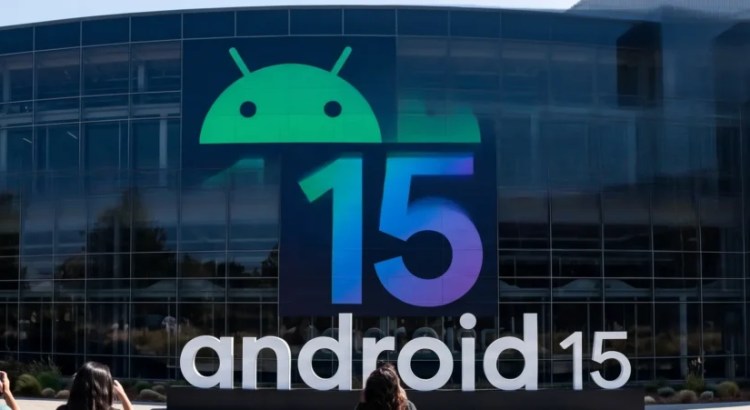
Android 15 was officially released on October 15, 2024.
Android 15 was a platform expansion release: satellite messaging, Private Space for sensitive apps, partial screen sharing, app archiving, and predictive back finally enabled by default. It launched on the Pixel 9 series — four phones, including the Pixel 9 Pro Fold — with Google’s Tensor G4 chip and an AI-first approach to everyday features.
Unlike Android 12’s radical redesign or Android 10’s gesture revolution, Android 15 was evolutionary. But satellite connectivity and Private Space are features with real-world utility that millions of users will depend on. Sometimes “useful” beats “exciting.”
Quick Facts
| Item | Value |
|---|---|
| Version | Android 15 |
| Codename | (none publicly; internally “Vanilla Ice Cream”) |
| API Level | 35 |
| Release Date | October 15, 2024 |
| Linux Kernel | 6.6+ |
| Initial Device | Google Pixel 9 / Pixel 9 Pro / Pixel 9 Pro XL / Pixel 9 Pro Fold |
| Previous Version | Android 14 |
| Next Version | (not yet released) |
What’s New
Satellite Connectivity
Android 15’s satellite connectivity is the headline feature. It lets compatible devices send and receive text messages via low-Earth orbit (LEO) satellites when no cellular or Wi-Fi network is available. No voice calls, no data — just SMS and basic emergency messaging through a satellite constellation.
The implementation uses a standardized satellite API that any carrier or satellite provider can integrate with. Early carrier partnerships include T-Mobile (Starlink) and AST SpaceMobile. The feature requires compatible hardware — the Pixel 9 series includes the necessary modem and antenna design — and will roll out region by region based on satellite coverage and regulatory approval.
Satellite messaging isn’t a daily-use feature. It’s an emergency feature — the difference between being reachable and being isolated when you’re hiking, in rural areas, or experiencing a natural disaster that takes out cellular infrastructure. Apple introduced satellite SOS with the iPhone 14 (2022); Android 15 brings equivalent capability to the Android ecosystem.
Google’s implementation is more open than Apple’s: any messaging app can use the satellite API (subject to carrier agreements), and multiple satellite providers can be supported.
Private Space
Private Space is a secure, isolated area within Android 15 where users can install and access sensitive apps — banking, health, dating, work — behind a separate authentication layer. Apps in Private Space have their own data storage, separate profiles, and don’t appear in the main app drawer, notifications (when locked), or recents.
This is Android’s version of Samsung’s Secure Folder, but built into the OS and available to all devices. Private Space uses a separate user profile under the hood, with FBE (file-based encryption) isolating its data from the main profile.
Private Space is genuinely useful for anyone who shares their phone with family, for work-personal separation, or for protecting sensitive apps from casual access. The separate profile architecture means even a compromised main profile can’t access Private Space data without the authentication token.
Partial Screen Sharing
Android 15 lets users share or record a single app window rather than the entire screen. This prevents accidental leakage — no more sharing your notification shade, incoming messages, or password autofill during a presentation or remote support session.
Android 14 introduced per-app screen recording; Android 15 extends it to all screen-sharing scenarios, including casting and video calls.
App Archiving
Android 15 lets users “archive” apps — remove the app binary but keep user data and the launcher icon. Archived apps appear grayed out on the home screen. Tapping an archived app re-downloads and restores it to its previous state. This is iOS’s “Offload Unused Apps” feature, finally on Android.
App archiving saves storage without losing data. For devices with limited storage (128 GB or less), this is a meaningful quality-of-life improvement.
Predictive Back Gesture (Enabled by Default)
The predictive back gesture — where swiping back shows a preview of the destination screen before committing — was introduced in Android 13 as a developer option and is now enabled by default in Android 15. The animation shows the previous screen sliding in from the left as the current screen slides right, with a transparent overlay.
Developers had two years to implement the OnBackInvokedCallback API (replacing the deprecated onBackPressed()). Android 15 made predictive back the default navigation animation, bringing Android’s back gesture visually in line with iOS’s swipe-to-go-back.
User Interface Changes
- Predictive back by default: The back gesture now shows the destination screen during the swipe.
- Private Space: A separate, locked app area, accessible from the bottom of the app drawer.
- Updated volume panel: Slightly redesigned with Material You styling updates.
- Theft detection: AI-powered theft detection uses accelerometer data to detect phone-snatching (sudden acceleration followed by running motion) and locks the device automatically.
- Remote Lock: If a device is stolen, users can lock it remotely using just their phone number (no Google account sign-in required) via android.com/lock.
Performance Improvements
- ART 15: ART runtime refinements reduced memory overhead and improved start-up times.
- Battery life: Google claimed 5–8% improvement through combined optimizations on Pixel 9 devices.
- Storage efficiency: App archiving reduced storage pressure for users with many installed apps.
Security Improvements
- Private Space: Isolated user profile for sensitive apps.
- Theft detection and Remote Lock: Hardware-assisted theft prevention and remote lockout.
- Cellular security: Enhanced protections against SS7 attacks and stingray surveillance devices.
- Screen sharing privacy: Single-app screen sharing prevents accidental data exposure.
- File Integrity: Android 15 added
fs-veritysupport for protecting system files from tampering.
Developer Features
| API | Description |
|---|---|
| Satellite connectivity API | SMS and emergency messaging via satellite |
PrivateSpace API | Programmatic access to Private Space features |
AppArchive | App archiving and restoration |
OnBackInvokedCallback (default) | Predictive back navigation enabled by default |
PartialScreenSharing | Per-app screen casting and recording |
TheftDetection API | Hardware-sensor-based theft detection |
CJK font improvements | Better rendering for Chinese, Japanese, Korean text |
AIDL for background services | Improved inter-process communication efficiency |
Devices That Shipped With Android 15
- Pixel 9 / Pixel 9 Pro / Pixel 9 Pro XL / Pixel 9 Pro Fold — Google’s largest Pixel launch. Four phones covering 6.3–8.0-inch displays, Tensor G4, 12–16 GB RAM. The Pixel 9 Pro Fold was Google’s second foldable, significantly improved — thinner, lighter, better displays, proper flagship cameras. $799 (Pixel 9) to $1,799 (Pro Fold).
- Samsung Galaxy S25 series — Expected early 2025 with One UI 7 based on Android 15. Anticipated Snapdragon 8 Gen 4, enhanced Galaxy AI.
Comparison With Android 14
| Android 14 | Android 15 |
|---|---|
| No satellite messaging | Satellite SMS and emergency messaging |
| No Private Space | Private Space with separate profile |
| Full screen sharing only | Per-app partial screen sharing |
| No app archiving | App archive with data preservation |
| Predictive back (developer option) | Predictive back enabled by default |
| API Level 34 | API Level 35 |
Android 15 expanded Android’s capability into genuinely new territory — satellite connectivity — while adding quality-of-life features that addressed long-standing gaps (Private Space, app archiving, partial screen sharing). It was an incremental release in visual terms but a platform expansion in capability terms.
Legacy and Impact
Satellite connectivity is Android 15’s most important feature by a wide margin. It’s not about daily convenience — it’s about emergency access when cellular infrastructure isn’t available. As satellite providers expand their LEO constellations (Starlink, AST SpaceMobile, Project Kuiper), satellite messaging will become available in more regions and eventually support voice and low-bandwidth data.
Private Space is Android’s answer to years of user requests for a built-in Secure Folder equivalent. Samsung users have had this for years; now every Android 15 device has it. The feature is well-designed, secure, and genuinely useful.
The predictive back gesture — finally enabled by default — closes a UX gap that existed since Android 10’s gesture navigation launched. Five years after gestures replaced buttons, the back gesture finally has the visual feedback users expect.
End of Support
- Pixel 9 series: 7 years (through October 2031).
- Play Services: Fully supported.
Fun Facts
- Internal codename: Android 15 was internally “Vanilla Ice Cream” (VIC). Google’s alphabetical dessert tradition continued internally even after public branding ended with Android 10.
- Easter egg: The Android 15 easter egg was a space-themed mini-game where players launched a rocket to explore a procedurally generated galaxy. Tapping on planets showed Android bugdroid astronauts.
- Pixel 9 Pro Fold improvements: The Pixel 9 Pro Fold was 10.5mm thin when unfolded — thinner than the Galaxy Z Fold 6 — with a 6.3-inch outer display that matched the Pixel 9 Pro, eliminating the “compromised outer screen” problem that plagued foldables.
- Satellite provider diversity: Android 15’s satellite API was designed to support multiple providers. Initial partners: T-Mobile/Starlink, AST SpaceMobile, and Iridium.
Frequently Asked Questions
What API level is Android 15?
API Level 35.
Does satellite connectivity require special hardware?
Yes. Devices must include a compatible modem and antenna design. The Pixel 9 series supports satellite connectivity; availability depends on carrier partnerships and regional regulatory approval.
What is Private Space?
Private Space is an isolated, encrypted area in Android 15 for sensitive apps. It uses a separate user profile and requires separate authentication to access. It’s similar to Samsung’s Secure Folder.
Is predictive back gesture mandatory?
Yes, for apps targeting Android 15 (API 35). Apps can override the animation, but the gesture behavior is standardized. Older apps (targeting API 34 or lower) continue using the legacy back behavior.
Final Thoughts
Android 15 is a release that prioritizes utility over spectacle. No design revolution, no paradigm-shifting UX change, no AI feature that dominates the tech news cycle. Just satellite connectivity that could save lives, Private Space that protects privacy, and a hundred smaller refinements that make Android better in ways you notice over weeks, not minutes.
That’s the right approach for a platform at Android’s stage of maturity. Sixteen years in, Android doesn’t need to prove it can innovate. It needs to prove it can be reliable — that when your car breaks down outside cell range, your phone can still reach help; that when you hand your phone to a colleague, your private apps stay private; that when a thief grabs your phone and runs, the device knows to lock itself.
The Pixel 9 series hardware is confident. The 7-year update promise continues. Satellite connectivity opens a new chapter in mobile communication. Android 15 is, in the best way possible, boring — a mature platform doing mature things well, with one genuinely new trick up its sleeve.
Related Articles
- Android Version History (2008–Present)
- Android 14: Complete Guide
- Satellite Connectivity: How Android 15 Changes Emergency Communication
- Pixel 9 & 9 Pro: Google’s Four-Phone Strategy
- The Evolution of Android Security
References
- Official Android 15 Platform Highlights
- Android Developers Blog: “Android 15” (October 2024)
- Satellite connectivity API technical documentation
- Private Space implementation documentation (source.android.com)
- Google Pixel 9 / 9 Pro / 9 Pro XL / 9 Pro Fold product documentation
- AST SpaceMobile and T-Mobile/Starlink partnership documentation
One thought to “Android 15: Complete Guide to Features, Release Date, API Level & History”